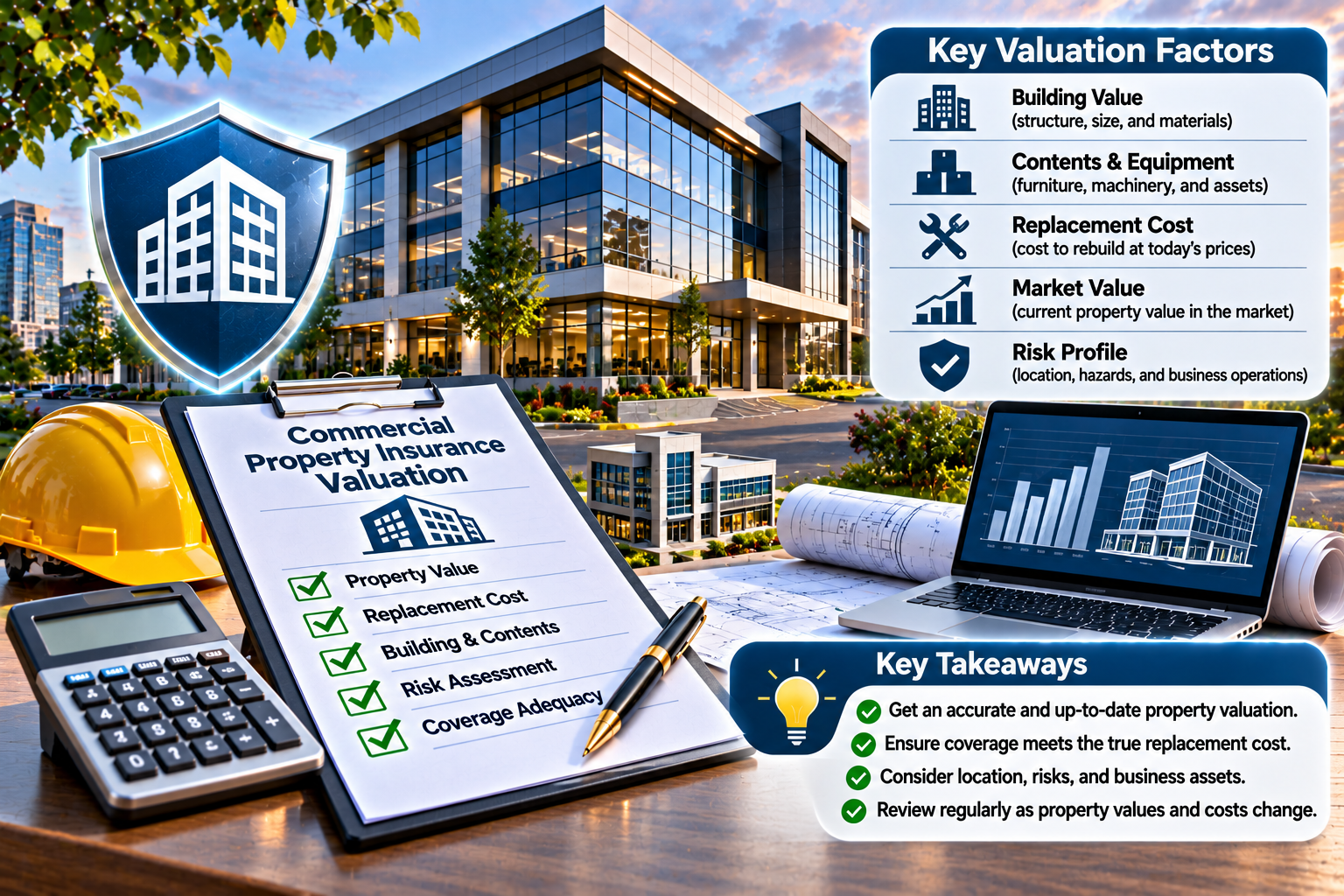
Commercial Property Insurance Valuation is a crucial aspect of managing and safeguarding commercial real estate investments. Understanding how properties are valued for insurance purposes not only helps owners protect their assets but also ensures they are paying the right premiums. In a landscape where properties can vary significantly in worth based on numerous factors, grasping the valuation process is essential for informed decision-making.
Valuation involves various methodologies and considerations, including market trends, property conditions, and legal frameworks. The stakes are high, as an inaccurate valuation can lead to substantial financial repercussions, making it critical for property owners to comprehend the intricacies of this field. From appraisals to understanding market influences, diving into the details of commercial property insurance valuation is not just beneficial but necessary for anyone involved in the real estate market.
Understanding the Fundamentals of Commercial Property Insurance Valuation
Commercial property insurance valuation is a critical aspect of risk management for businesses. It ensures that properties are accurately assessed for their worth, which directly influences the coverage amounts and premiums set by insurers. The complexities of the valuation process stem from the diverse nature of commercial properties, which can range from office buildings to retail spaces and industrial warehouses. Understanding the core principles of valuation is essential for businesses to protect their investments adequately.
The fundamentals of commercial property insurance valuation revolve around several key concepts. First and foremost, the principle of indemnity plays a crucial role, which asserts that insurance should restore the insured to the same financial position they were in prior to a loss. Accurate valuation, therefore, is paramount, as it determines the policy limits and ensures that coverage is neither over nor underinsured. The valuation methods widely used include Replacement Cost, Actual Cash Value, and Market Value.
Replacement Cost considers the expense to replace the property with a similar one at current prices, while Actual Cash Value deducts depreciation from the Replacement Cost. Market Value, on the other hand, reflects what a buyer would pay for the property in the current market. Each method has its advantages and is chosen based on the specific needs of the business.
Significance of Accurate Valuation in Commercial Properties
Accurate valuation is vital for several reasons. Firstly, it affects the premiums to be paid; underestimating the property value can lead to inadequate coverage, while overestimating can result in unnecessarily high premiums. Moreover, in the event of a loss, the valuation will dictate the compensation amount, which can significantly impact the financial standing of a business.
Various types of commercial properties require insurance valuation, including but not limited to:
- Office Buildings
- Retail Stores
- Industrial Properties
- Hotels and Lodging Facilities
- Warehouses
- Mixed-Use Developments
- Healthcare Facilities
- Specialty Properties, such as data centers or manufacturing plants
Each of these properties presents unique challenges and considerations that must be factored into their valuation. Understanding these nuances allows businesses to make informed decisions about their insurance needs and ensure that their properties are adequately protected against potential risks.
In summary, commercial property insurance valuation is a complex but essential process that requires thorough knowledge of the underlying principles and accurate application of various valuation methods. By prioritizing accurate assessments, businesses can safeguard their assets and mitigate potential financial losses in the face of unforeseen events.
Key Factors Influencing Commercial Property Valuation
Valuing commercial property insurance requires a comprehensive understanding of various factors that can impact the overall worth of a property. These factors play a pivotal role not only in determining insurance premiums but also in ensuring that property owners are adequately covered against potential losses. Understanding these elements is essential for stakeholders, including property owners, insurers, and investors, as it aids in making informed decisions.
Location is undeniably one of the most significant factors influencing commercial property valuation. Properties situated in prime areas with high foot traffic and proximity to essential amenities generally hold greater value. This is often amplified in urban environments where demand for commercial spaces is high. Market trends also significantly impact valuations, as shifts in demand and supply can either inflate or deflate property values. Furthermore, the condition of the property itself—including its age, architecture, and maintenance—affects its insurability and overall market value.
Key Factors in Property Valuation
Several essential factors contribute to the valuation of commercial properties. Understanding these elements can help property owners and insurance companies assess risks and make strategic decisions.
- Location: The geographic area where the property is situated heavily influences its value. Properties in bustling business districts usually fetch higher prices due to increased demand.
- Market Trends: Current market dynamics, such as economic growth or downturns, affect the demand for commercial real estate, thereby impacting valuations.
- Property Condition: A well-maintained property with modern amenities will be valued higher than a neglected one. Regular maintenance and renovations can lead to significant appreciation over time.
- Zoning Regulations: Local zoning laws can restrict or enhance the potential use of a property, directly affecting its value. Properties with flexible zoning often attract a higher market price.
- Comparable Sales: The sale prices of similar properties in the vicinity serve as benchmarks in determining a property’s market value. This method, known as the Comparative Market Analysis (CMA), is widely used in the industry.
“Location, condition, and market trends are the triad that shapes commercial property valuation.”
The interplay of these factors creates a dynamic valuation landscape for commercial properties. Investors and property owners should continuously monitor these variables to ensure they make informed decisions regarding insurance coverage and investment strategies.
Different Valuation Methods in Commercial Property Insurance
In the realm of commercial property insurance, valuation methods play a pivotal role in determining the insurable value of properties. These methods help insurers assess risk and set premiums while ensuring that policyholders receive fair compensation in the event of a loss. Understanding the various valuation methods can empower property owners to make informed decisions about their insurance coverage.
Replacement Cost Valuation
Replacement cost valuation focuses on calculating the amount necessary to replace damaged property with new materials of similar kind and quality without considering depreciation. This method is widely preferred because it ensures that property owners can restore their assets to their original state after a loss.
The advantages of the replacement cost method include:
- Policyholders receive adequate compensation to rebuild or replace their property.
- It provides a more accurate representation of the current market conditions.
- It typically results in higher insurance payouts compared to actual cash value.
However, there are also drawbacks:
- This method can lead to higher premiums due to the increased coverage amount.
- Determining the right replacement cost can be complex, requiring detailed evaluations.
Replacement cost valuation is particularly applicable for newly constructed properties or properties in high-demand areas where rebuilding costs are substantial.
Actual Cash Value Valuation
Actual cash value (ACV) valuation determines the value of property by subtracting depreciation from the replacement cost. This method reflects the property’s current value while accounting for its age and wear, thus providing a more realistic financial perspective.
The benefits of the actual cash value method include:
- Lower premiums since the payout is based on the depreciated value.
- Simplified claims process because it often requires less detailed assessments.
On the downside:
- Policyholders may find the compensation insufficient to fully repair or replace their property.
- It can lead to disputes about the actual value of the property at the time of loss.
ACV is most suitable for older properties or those with significant wear and tear where the replacement cost far exceeds the current value.
Market Value Valuation
Market value valuation is determined by assessing the price that the property would achieve if sold in the open market. This method takes into account various factors such as location, property condition, and recent sale prices of comparable properties.
Advantages of market value valuation include:
- Provides a realistic valuation based on current market conditions and trends.
- Reflects what potential buyers are willing to pay, which can lead to fair compensation.
Conversely, the disadvantages consist of:
- Market fluctuations can lead to significant variations in property values.
- It may require extensive market analysis, which can complicate the valuation process.
Market value valuation is ideal for commercial properties in dynamic markets where real estate values are volatile or for properties intended for sale or investment.
The Role of Appraisals in Commercial Property Insurance Valuation
Obtaining a comprehensive and accurate property appraisal is vital for establishing the insurance value of commercial properties. This process ensures that property owners are adequately covered against potential losses while also protecting insurance companies from over-insuring properties. An appraisal evaluates the property’s current market value, which is essential for determining the appropriate coverage amount in a commercial property insurance policy.
The process of obtaining a property appraisal for commercial insurance purposes typically involves several key steps. Initially, property owners or their insurance agents will select a qualified appraiser, often certified and familiar with the local real estate market. The appraiser will then schedule a visit to the property to conduct a thorough inspection, assessing various factors such as the property’s size, condition, location, and any unique features that may affect its value. After the inspection, the appraiser will research comparable properties in the area, often referred to as “comps,” to determine how similar properties have been valued in the current market.
The appraiser will compile all the findings into a detailed report, which includes the property’s estimated market value, any relevant photos, and a summary of the appraisal methodology used. This report is then submitted to the property owner and their insurance provider to finalize the valuation used for the insurance policy.
Certified Appraisals versus Informal Assessments
Understanding the differences between certified appraisals and informal assessments is crucial for making informed decisions regarding commercial property insurance valuation. Certified appraisals are conducted by licensed and accredited professionals who follow standardized procedures and methodologies. They provide a legally recognized and defensible valuation, which is particularly useful when dealing with disputes or claims. In contrast, informal assessments are generally less rigorous and might be conducted by individuals without formal training or credentials in appraisal practices.
While certified appraisals offer greater reliability and credibility, informal assessments can be quicker and less expensive but may lack the depth of analysis needed for insurance purposes. They can serve as a preliminary gauge of property value but are not recommended for determining insurance coverage amounts.
The following table Artikels the steps involved in the appraisal process for commercial property insurance evaluation:
| Step | Description |
|---|---|
| 1. Selection of Appraiser | Choose a qualified appraiser with experience in the local commercial property market. |
| 2. Property Inspection | The appraiser conducts a detailed inspection of the property, noting size, condition, and features. |
| 3. Research Comparables | Investigation of recently sold properties similar to the subject property to gauge market value. |
| 4. Value Calculation | Using the collected data, the appraiser calculates an estimated market value based on various appraisal methods. |
| 5. Report Compilation | Preparation of a formal appraisal report detailing findings, methodologies, and valuation conclusions. |
| 6. Submission | The final appraisal report is submitted to the property owner and insurance provider for review. |
Legal and Regulatory Considerations in Valuation Practices
In the realm of commercial property insurance valuation, legal and regulatory frameworks play a crucial role in ensuring that valuation practices are conducted fairly, transparently, and consistently. These frameworks not only dictate the methodologies used for valuation but also establish standards that protect all parties involved in the insurance process, including property owners, insurers, and regulatory bodies. Understanding these regulations is vital for compliance and maintaining the integrity of valuation practices.
Numerous legal and regulatory bodies oversee commercial property valuation practices. In the United States, for example, the Appraisal Foundation, a non-profit organization, is responsible for establishing appraisal standards and promoting competency in the profession. Its Uniform Standards of Professional Appraisal Practice (USPAP) sets forth the ethical and performance standards for appraisals. Adhering to USPAP is essential for appraisers to maintain credibility and legality in their valuations. Similarly, the International Valuation Standards Council (IVSC) provides a global framework for valuation standards, which is increasingly important in a globalized economy where properties may be valued across borders.
The importance of compliance with these regulations cannot be overstated. Non-compliance can lead to significant implications, not only for appraisers but also for property owners and insurance companies. For instance, failing to adhere to established valuation standards can result in inaccurate property valuations, which may lead to underinsurance or overinsurance. Underinsurance can leave property owners vulnerable in the event of a loss, while overinsurance can lead to inflated premiums, impacting financial viability. Additionally, legal repercussions may arise, including penalties, lawsuits, or loss of licensure for appraisers and firms that do not comply with regulatory requirements.
Key organizations responsible for setting valuation standards in the industry include the following:
- The Appraisal Foundation (TAF) – This organization sets the USPAP, which is recognized by federal and state regulators as the standard for appraisals.
- The International Valuation Standards Council (IVSC) – Provides international standards applicable across different jurisdictions for consistency in valuation practices.
- The American Society of Appraisers ( ASA) – A professional organization that contributes to the setting of valuation standards and offers accreditation to qualified appraisers.
- The Royal Institution of Chartered Surveyors (RICS) – An international organization that promotes standards in land, property, and construction, including valuation practices.
The relationship between these organizations and regulatory bodies is essential for a standardized approach to valuation. They work collaboratively to ensure that valuation practices are not only reflective of current market conditions but also compliant with legal statutes. Property valuation is not merely an academic exercise; it has real-world implications in legal, financial, and insurance contexts.
The integration of legal and regulatory considerations in valuation practices reinforces the need for valuation professionals to stay informed about changes in laws and standards. Continuous education, training, and adherence to ethical practices are vital components in ensuring compliance and maintaining the integrity of the commercial property insurance valuation process. By understanding and embracing these considerations, professionals can contribute to a more reliable and accountable valuation landscape.
The Impact of Market Conditions on Insurance Premiums
The landscape of commercial property insurance is heavily influenced by the changing tides of market conditions. As the economy fluctuates, so too do the premiums associated with insuring commercial properties. Understanding these dynamics is crucial for property owners seeking to manage their insurance costs effectively.
Market conditions play a vital role in determining the risk assessments that insurers conduct when setting premiums. As market trends shift, insurers reassess the potential risks associated with properties, which directly impacts the costs charged for coverage. A robust economy often leads to lower premiums due to heightened competition among insurers, while a downturn can increase perceived risks, resulting in rising premiums.
Market Indicators Influencing Insurance Costs
Several key market indicators significantly affect how insurance costs are determined. Understanding these factors can help business owners anticipate changes in their insurance premiums. The following points describe some of the most impactful indicators:
- Economic Growth: Strong economic performance typically leads to lower insurance premiums as businesses expand and investments increase.
- Real Estate Market Trends: Fluctuations in property values can affect risk assessments, with rising property values often leading to higher premiums.
- Natural Disaster Frequency: Areas prone to natural disasters, such as hurricanes or floods, may see increased premiums due to higher risk levels.
- Claims History: A history of frequent claims in a particular area or property type can lead insurers to raise premiums to cover anticipated costs.
- Regulatory Changes: Updates in laws or regulations affecting property insurance can impact costs, with stricter regulations potentially leading to higher premiums.
- Interest Rates: Changes in the interest rates can influence investment returns for insurers, affecting their premium pricing strategies.
- Supply Chain Factors: Disruptions or challenges in the supply chain can impact construction and repair costs, which may be reflected in insurance premiums.
Understanding these indicators is essential for property owners to navigate the complexities of commercial property insurance pricing. By staying informed about market conditions and their implications, business owners can make more strategic decisions regarding their insurance needs.
Common Misconceptions About Commercial Property Insurance Valuation
Many property owners hold misconceptions regarding commercial property insurance valuation, which can significantly impact their financial decisions and risk management strategies. These misconceptions often stem from a lack of understanding of the valuation process, leading to inadequate coverage or unexpected losses.
Understanding these misconceptions is crucial for property owners to ensure they are adequately protected and that their property is valued appropriately. Here are some prevalent misconceptions that require clarification:
Misconceptions Surrounding Valuation
The following points highlight common misconceptions about commercial property insurance valuation, along with their potential consequences:
- Replacement Cost Equals Market Value: Many believe that the replacement cost of a property is the same as its market value. In reality, replacement cost refers to the expense of rebuilding the property without considering depreciation or market conditions. This misconception can lead to underinsurance, exposing owners to significant financial risk in the event of a loss.
- All Improvements Are Automatically Covered: Property owners often assume that all renovations or improvements made to a property are automatically covered under their insurance policy. However, certain enhancements may require additional coverage or endorsements to be fully protected, which could leave owners vulnerable to gaps in coverage.
- Insurance Valuation Is a One-Time Process: Some believe that once a property is valued, it remains valued indefinitely. In truth, property values fluctuate due to market conditions, economic factors, and changes in the property itself. Regular re-evaluation is essential to ensure adequate coverage and reflect current market dynamics.
- Low Premiums Indicate Sufficient Coverage: It is a common misconception that lower insurance premiums equate to adequate coverage. In many cases, lower premiums may result from reduced coverage limits or increased deductibles. Property owners must thoroughly review their policies to ensure that the coverage aligns with their property value and risks.
- Valuation Is Only Necessary at Policy Inception: Many owners think that property valuation only needs to be done when obtaining insurance. However, regular assessments are critical as property conditions and market values change over time. Failing to adjust coverage accordingly can lead to substantial financial losses during claims.
It is vital for property owners to grasp these misconceptions to avoid financial pitfalls. Accurate information regarding commercial property insurance valuation helps ensure that properties are sufficiently insured, which is essential for effective risk management. Inaccurate or outdated valuation not only jeopardizes financial security but can also result in claims being denied or underpaid, further complicating recovery efforts post-loss.
Future Trends in Commercial Property Insurance Valuation
As the commercial property insurance landscape evolves, several emerging trends are reshaping valuation practices. The industry increasingly recognizes the importance of accurate property valuations to mitigate risks and optimize insurance coverage. With advancements in technology and data analytics, the future of commercial property insurance valuation looks promising, offering enhanced precision and innovative solutions.
The integration of technology and data analytics plays a pivotal role in improving valuation accuracy. By leveraging advanced tools and methodologies, insurers can better assess property values, taking into account various factors such as location, market trends, and property conditions. The use of artificial intelligence (AI) and machine learning algorithms allows insurers to analyze vast amounts of data quickly, providing more accurate valuations through predictive analytics. This not only reduces human error but also increases efficiency in the valuation process.
Innovative Practices in the Industry
Several innovative practices are being adopted in the commercial property insurance sector, driven by the need for more accurate and efficient valuation processes. These practices include:
- Use of Drones: Drones are increasingly used for aerial inspections of commercial properties. They can capture high-resolution images and provide real-time data, enabling insurers to assess property conditions from unique angles, which enhances valuation accuracy.
- Big Data Analytics: Insurers are harnessing big data to identify trends and patterns in property values. By analyzing data from various sources, such as economic indicators and local real estate markets, insurers can make more informed decisions about property valuations.
- 3D Modeling: The adoption of 3D modeling technology allows for detailed visualizations of properties. This technology helps insurers understand the physical attributes of buildings better, ultimately leading to more precise valuations.
- Blockchain Technology: Blockchain is emerging as a tool for improving transparency and security in property transactions. By ensuring that property ownership and valuation data are securely recorded, blockchain can reduce disputes and fraud in the valuation process.
- Remote Sensing Technologies: Techniques such as satellite imaging and GIS (Geographic Information Systems) are now employed to analyze property characteristics and conditions. These technologies provide valuable geospatial data that contributes to more accurate value assessments.
The convergence of these innovative practices highlights how technology is not just an adjunct to traditional methods but a fundamental component of modern commercial property insurance valuation. As these trends continue to gain traction, they promise to enhance the industry’s ability to deliver precise, timely, and reliable valuations that meet the evolving needs of businesses and property owners alike.
Closure
In summary, Commercial Property Insurance Valuation is an intricate process that combines various factors and methodologies to determine the worth of commercial properties for insurance purposes. As property owners navigate this complex landscape, staying informed about valuation methods, market conditions, and legal considerations will empower them to make better choices. Embracing the evolving trends and leveraging technology can enhance the accuracy and reliability of valuations, ultimately protecting investments and ensuring financial stability.
Questions Often Asked
What is the purpose of commercial property insurance valuation?
The purpose is to determine the accurate value of a property to ensure it is properly insured, which helps mitigate financial losses in case of damage or loss.
How often should commercial properties be revalued?
Commercial properties should ideally be revalued every 3 to 5 years or after significant changes in the market or property conditions.
Can property owners influence the valuation process?
Yes, property owners can influence valuation by maintaining their properties, providing accurate information, and working with reputable appraisers.
What happens if a property is undervalued in the insurance policy?
If a property is undervalued, the owner may not receive enough compensation to cover losses, leading to significant financial strain in case of a claim.
Are there specific regulations governing commercial property valuation?
Yes, various legal and regulatory frameworks govern commercial property valuation to ensure accuracy, fairness, and compliance within the industry.