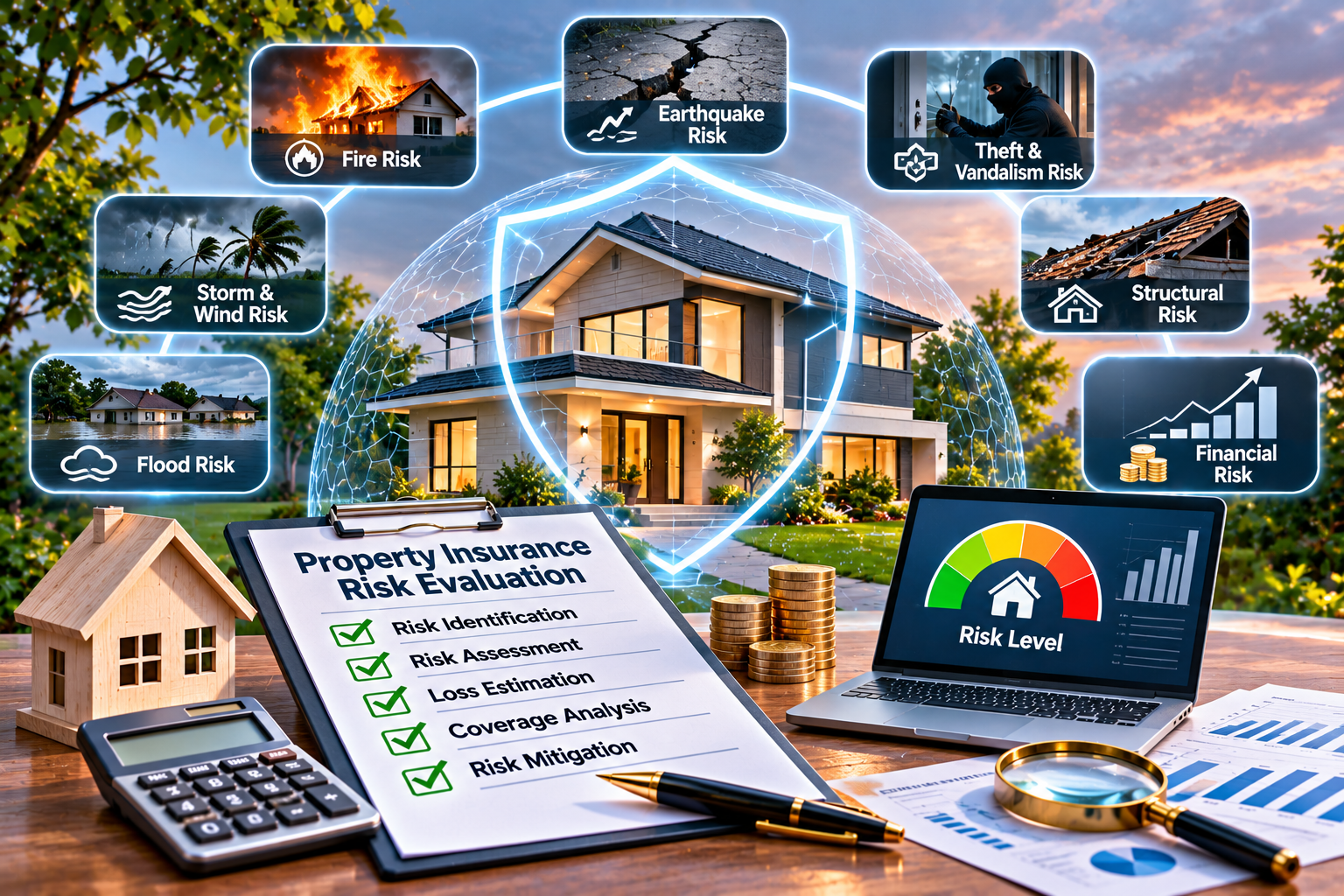
Beginning with Property Insurance Risk Evaluation, the narrative unfolds in a compelling and distinctive manner, drawing readers into a story that promises to be both engaging and uniquely memorable.
This essential process serves as the backbone of the insurance industry, evaluating the risks associated with property to determine coverage options and premiums. Understanding the intricacies of risk evaluation is crucial, as it directly impacts how insurers assess potential threats and set policies that protect both their clients and their business.
Understanding Property Insurance Risk Evaluation
Property insurance risk evaluation is a critical process within the insurance industry that assesses the potential risks associated with insuring a property. This evaluation not only determines the likelihood of a claim being made but also plays a significant role in shaping the policy terms and premiums. By effectively identifying and quantifying risks, insurance providers can make informed decisions regarding coverage options, pricing, and overall risk management strategies.
The importance of property insurance risk evaluation is underscored by its role in ensuring that both insurers and policyholders have a clear understanding of the risks involved. Accurate evaluations help in predicting potential losses and in setting premiums that correspond to the level of risk presented. Without thorough risk evaluation, insurance companies may either overestimate or underestimate the risks associated with a property, leading to financial instability.
Key Components of Property Insurance Risk Evaluation
The risk evaluation process in property insurance consists of several key components that collectively aid in assessing the overall risk profile of a property. Each of these components plays a crucial role in determining coverage and premium rates. The following are the primary elements involved:
- Property Characteristics: The physical attributes of the property, including its age, construction materials, and overall condition, are fundamental in evaluating risk. For example, a newly built home made with fire-resistant materials may present a lower risk compared to an older wooden structure.
- Location: The geographical location of a property significantly influences its risk evaluation. Factors such as proximity to flood zones, crime rates, and historical weather patterns are analyzed. Properties in high-risk areas may incur higher premiums due to the increased likelihood of natural disasters or theft.
- Claim History: A property’s past claims history is indicative of its risk potential. Frequent claims can signal higher risk, prompting insurers to adjust premiums accordingly. For instance, a property with multiple water damage claims may face increased rates due to perceived ongoing vulnerabilities.
- Market Trends: Current market conditions and trends, including real estate values and local economic stability, are considered. A property located in a declining market may be seen as a higher risk, impacting its insurability and premium rates.
- Risk Mitigation Measures: The presence of safety features like security systems, fire alarms, and disaster preparedness plans can lower the risk profile of a property. Insurers often provide discounts for homes equipped with advanced safety measures, reflecting their commitment to risk management.
Real-life examples illustrate the impact of risk evaluation on insurance premiums and policies. In 2020, after a series of hurricanes impacted the Gulf Coast, many insurance companies reevaluated their risk assessment models. Properties previously insured at standard rates faced significant increases in premiums due to the heightened risk of future storm damage. Conversely, a homeowner in a low-crime, low-flood area might see their rates drop after a comprehensive risk evaluation indicated minimal exposure to loss.
Through the lens of risk evaluation, insurance providers can create tailored policies that meet the unique needs of property owners while ensuring financial sustainability for the insurers themselves. This balance is essential for maintaining trust and stability within the ever-evolving insurance market.
The Role of Underwriters in Risk Assessment
Underwriters play a crucial role in the property insurance industry by assessing risks associated with various properties. Their evaluations directly influence the terms and conditions of insurance policies, ensuring that risks are accurately priced and managed. Understanding their methodologies and decision-making processes is essential for both insurers and policyholders.
Underwriters utilize a variety of methodologies to assess risks linked to properties. These methods involve a comprehensive analysis of both quantitative and qualitative data, allowing for an informed judgment regarding the risk level of insuring a particular property. The process typically begins with the collection of property-specific information, including its location, age, construction type, and historical claims data.
Methodologies Used by Underwriters
The methodologies employed by underwriters in risk assessment include statistical analysis, predictive modeling, and comparative analysis. Each approach offers unique insights into the potential risks of a property.
- Statistical Analysis: Underwriters analyze historical data and trends to identify patterns that may indicate risk levels. This includes examining past claims for similar properties and understanding seasonal factors that may contribute to risk, such as flooding or fire incidents.
- Predictive Modeling: Advanced algorithms and machine learning techniques are applied to forecast future risks based on existing data. These models can incorporate various variables, such as economic indicators and environmental changes, to predict potential losses.
- Comparative Analysis: By benchmarking properties against similar ones in the market, underwriters can assess relative risks and pricing strategies. This method relies on data from comparable properties to ensure fairness in the underwriting process.
The significance of data analysis in the underwriter’s decision-making process cannot be overstated. With the growing availability of data, underwriters now have access to more detailed information than ever before, enabling them to make more precise evaluations.
Importance of Data Analysis
Data analysis allows underwriters to create a holistic view of potential risks. Key aspects include:
- Enhanced Accuracy: Analyzing large datasets helps in identifying lower-risk properties, allowing for competitive pricing and better risk selection.
- Trend Identification: Data analysis reveals trends that may not be immediately visible, such as emerging risks in specific regions or property types.
- Fraud Detection: Advanced data analytics can assist in identifying potentially fraudulent claims or applications, helping to protect the insurer’s interests.
To illustrate successful underwriting practices, several case studies highlight effective risk assessment outcomes. For instance, a major insurance company adopted a data-driven approach to evaluate properties in flood-prone areas. By integrating geographic information systems (GIS) with predictive analytics, the underwriters could identify properties at risk of flooding and adjust their policies accordingly.
“The combination of GIS technology with predictive modeling resulted in a 30% reduction in claims for flood-related incidents.”
Another case involved a property insurer that utilized social media analytics to gauge the condition and risk factors of properties. By monitoring public posts about neighborhoods and properties, underwriters gained insights that traditional data sources might not reveal, leading to more informed underwriting decisions.
In summary, underwriters are pivotal in assessing property risks through various methodologies, and the integration of data analysis significantly enhances their decision-making capabilities. These practices not only improve risk assessment outcomes but also contribute to the overall sustainability and profitability of the insurance industry.
Common Risks Evaluated in Property Insurance
Property insurance is designed to protect against various risks that can lead to loss or damage of property. Understanding these risks is crucial for both insurers and policyholders as they influence premium rates, coverage options, and overall risk management strategies. Evaluating these risks helps to accurately assess the potential financial implications in the event of a claim, ultimately ensuring that property owners are adequately protected.
Several types of risks are commonly evaluated in property insurance. These risks vary widely based on factors such as location, environmental conditions, and the nature of the property itself. Insurers conduct thorough assessments to determine the likelihood and potential impact of these risks, which can include natural disasters, theft, and other unforeseen events. The geographical location and environmental factors play a significant role in these evaluations, as certain areas are more susceptible to specific types of risks.
Types of Risks Affecting Property Insurance
The following types of risks are commonly assessed when determining property insurance coverage:
- Natural Disasters: Events such as earthquakes, floods, hurricanes, and wildfires pose significant risks to properties, particularly in vulnerable regions. For instance, properties located in flood zones may require additional flood insurance due to the high likelihood of damage from rising water levels.
- Theft and Vandalism: Properties that are in urban areas or neighborhoods with higher crime rates may face increased risk of theft and vandalism. Insurers take these factors into account when assessing the overall risk and determining policy premiums.
- Fire Risks: Fire can lead to catastrophic property loss. Buildings constructed with flammable materials or located near dense vegetation may be considered higher risk for fire damage, particularly in areas prone to wildfires.
- Structural Risks: The age and condition of a property significantly impact its risk profile. Older buildings may have outdated electrical systems or roofing that could lead to higher chances of damage or loss.
- Environmental Contaminants: Properties located near industrial sites or hazardous waste facilities may face risks from environmental contamination, which can lead to significant liability and clean-up costs.
Geographical location and environmental factors are critical in risk evaluation for property insurance. For example, homes in coastal regions are more prone to hurricanes and flooding, while properties in the Midwest may face tornado risks. Insurers analyze historical data, local weather patterns, and geographical nuances to assess these risks accurately.
Summary of Property Types and Associated Risks
The following table summarizes various property types and their associated risks, demonstrating how different buildings and locations contribute to varying insurance considerations.
| Property Type | Associated Risks |
|---|---|
| Residential Homes | Flooding, theft, fire, structural damage |
| Commercial Buildings | Vandalism, fire, environmental hazards, liability |
| Industrial Sites | Environmental contamination, equipment failure, fire |
| Vacant Properties | Theft, vandalism, structural degradation |
| Seasonal Properties | Weather-related damage, theft, maintenance issues |
Understanding these risks allows both insurers and policyholders to make informed decisions regarding coverage and risk management strategies, ultimately leading to better protection of assets.
The Impact of Technology on Risk Evaluation Processes
Technological advancements have significantly transformed risk evaluation methods in the property insurance sector. As the industry adapts to the increasingly digital landscape, insurers are leveraging new tools and methodologies to enhance their risk assessment capabilities. This evolution not only improves efficiency but also leads to more accurate evaluations, ultimately benefiting both the insurers and the insured.
The integration of technology into risk evaluation processes has introduced innovative approaches that streamline data collection and analysis. Traditional methods often relied on manual assessments and historical data, which could be time-consuming and prone to human error. In contrast, modern technological solutions utilize automated systems, allowing for faster and more reliable evaluations. The use of geographic information systems (GIS) and Internet of Things (IoT) devices enables insurers to gather real-time data on property conditions and environmental factors, enhancing their understanding of risk profiles.
The Role of Big Data and Machine Learning in Risk Assessment Accuracy
Big data and machine learning have emerged as game-changers in property insurance risk evaluation. These technologies allow insurers to analyze vast amounts of data from various sources, resulting in more precise risk assessments. The ability to process and interpret complex datasets helps insurers identify patterns and trends that may not be visible through traditional evaluation methods.
The following points highlight the advantages of big data and machine learning in enhancing risk assessment accuracy:
- Predictive Analytics: By analyzing historical claims data, insurers can predict future risk levels and tailor policies accordingly.
- Enhanced Underwriting: Machine learning algorithms can assess individual risk factors and adjust premiums based on a more comprehensive risk profile.
- Fraud Detection: Automated systems can identify unusual patterns in claims, flagging potentially fraudulent activities for further investigation.
- Real-time Insights: Continuous data collection from IoT devices allows insurers to monitor risks as they evolve, leading to timely interventions.
A notable example of these technologies in action is the use of drones for property inspections. Drones can quickly and efficiently assess the condition of roofs and other hard-to-reach areas, providing insurers with high-resolution imagery and data. This not only speeds up the evaluation process but also leads to more informed decision-making regarding coverage and risk management.
Machine learning models have also shown remarkable success in assessing property risks by analyzing factors such as location, structural integrity, and historical data about natural disasters. These models can continuously learn and refine their assessments, making them increasingly accurate over time.
In summary, as technology continues to evolve, the property insurance industry is likely to experience further improvements in risk evaluation processes. The combination of big data, machine learning, and innovative tools promises to create a more accurate, efficient, and responsive insurance landscape, ultimately benefiting all stakeholders involved.
Legal and Regulatory Considerations in Risk Evaluation
The legal and regulatory landscape surrounding property insurance risk evaluation is complex and pivotal in shaping how insurers assess and manage risk. Insurers not only have to comply with various laws but also have to navigate an intricate framework of regulations designed to protect consumers while ensuring the stability of the insurance market. This section Artikels the legal frameworks, key regulations, and landmark cases that have influenced property insurance practices.
Legal Frameworks Governing Risk Evaluation
Insurers operate within a framework of both state and federal laws that dictate how risks are evaluated and the responsibilities of the insurers. The primary legal statutes include the Insurance Code of each state, which Artikels the requirements for insurance contracts, licensing, and the responsibilities of insurers towards policyholders. Insurers must adhere to fiduciary duties, ensuring that they act in good faith and conduct fair risk evaluations.
Moreover, the National Association of Insurance Commissioners (NAIC) plays a crucial role in developing model laws and regulations that states can adopt. These guidelines aim to ensure a standardized approach to risk management practices across states, thereby reinforcing consumer protection and maintaining market integrity.
Key Regulations Impacting Risk Evaluation
Several key regulations significantly affect how insurers evaluate and manage risks. These regulations include:
- Fair Housing Act: Prohibits discrimination in housing and insurance practices, influencing how risk assessments are conducted, particularly regarding geographic and demographic factors.
- Gramm-Leach-Bliley Act: Addresses the protection of personal financial information, impacting how insurers gather and analyze data for risk evaluation.
- Risk Retention Act: Allows groups of businesses to form risk retention groups, which influences the availability and evaluation of insurance options for certain industries.
These regulations not only guide insurers in conducting risk evaluations but also establish a framework that safeguards consumer rights and promotes fair practices.
Legal Cases Influencing Property Insurance Practices
Legal precedents have played a pivotal role in shaping property insurance practices, often influencing regulations and industry standards. Notable cases include:
- State Farm Fire & Casualty Co. v. Campbell (2003): This case emphasized the importance of bad faith and the duty of insurers to act fairly, leading to increased scrutiny over claims management and risk evaluation processes.
- Allstate Insurance Co. v. Hague (1981): This case clarified the concept of “reasonable expectations,” reinforcing the idea that insurance policies should align with the insured’s understanding of coverage, which impacts how risks are evaluated and communicated.
- Berger v. New York Life Insurance Co. (1997): In this case, the court ruled on issues related to misrepresentation in underwriting, establishing the necessity for accuracy and transparency in risk evaluations.
These cases reflect the evolving nature of property insurance law and underscore the importance of compliance and ethical practices in risk evaluation.
Challenges in Property Insurance Risk Evaluation
Evaluating property risks presents numerous challenges for insurers, primarily due to the inherent complexities of the properties themselves and the dynamic nature of external factors affecting risk assessment. Insurers must not only rely on historical data but also anticipate future risks that may not have been previously encountered.
One of the most significant challenges is the unpredictable nature of environmental conditions, which has been increasingly complicated by climate change. Properties that were once considered low-risk may now be susceptible to new threats such as flooding, wildfires, and other extreme weather events. These changes necessitate a reevaluation of existing risk models and require insurers to stay abreast of the latest environmental research and trends.
Main Challenges Faced by Insurers
Insurers encounter several primary challenges while assessing property risks, which include:
- Data Availability and Quality: Limited or outdated data on property conditions and local risks can lead to inaccurate assessments.
- Dynamic Risk Factors: New risks emerge as climate conditions evolve, such as increased frequency of natural disasters that were previously uncommon.
- Regulatory Changes: Insurers must navigate a complex landscape of regulations that can change rapidly, affecting risk evaluation criteria.
- Technological Integration: Adapting to new technologies for data collection and analysis can be a significant hurdle for traditional insurers.
- Market Competition: Insurers face pressure to reduce premiums while accurately assessing risks, which can lead to underpricing policies.
In light of these challenges, it is essential for insurers to employ effective strategies to enhance their property risk evaluations.
Strategies to Overcome Challenges
To improve property insurance risk evaluations, insurers can adopt several strategies that enhance assessment accuracy and adaptability to changing conditions. The following points highlight these strategies:
- Invest in Advanced Analytics: Utilizing big data and predictive analytics can help insurers better understand risk patterns and anticipate future risks.
- Enhance Data Collection: Implementing new technologies such as IoT devices can provide real-time data on property conditions, enabling more accurate assessments.
- Continuous Learning: Engaging in ongoing training and development for staff ensures that they remain informed about emerging risks and regulatory changes.
- Collaboration with Experts: Partnering with environmental scientists and risk management experts can provide valuable insights into evolving risk factors.
- Flexible Policy Structures: Offering customizable insurance policies can help address the unique risk profiles of different properties.
These strategies reflect a proactive approach to navigating the complexities of property insurance risk evaluation, allowing insurers to stay resilient in a rapidly changing landscape.
Future Trends in Property Insurance Risk Evaluation
The landscape of property insurance risk evaluation is evolving rapidly, shaped by advancements in technology and changing consumer behavior. As insurers look to enhance their risk assessment processes, several emerging trends are becoming evident. These trends not only influence how risks are evaluated but also affect the overall dynamics of the insurance industry, impacting both insurers and consumers alike.
One of the most significant trends in property insurance risk evaluation is the increasing integration of advanced technologies, such as artificial intelligence (AI) and machine learning (ML). These technologies enable insurers to analyze vast amounts of data more efficiently, leading to more accurate risk assessments. By leveraging data analytics, insurers can identify patterns and correlations in risk factors that were previously overlooked. This shift is expected to enhance underwriting precision and reduce claims fraud.
Influence of Consumer Behavior on Risk Evaluation
Consumer behavior is playing a pivotal role in shaping risk evaluation processes within property insurance. As customers become more informed and engaged, their expectations are changing. They now seek personalized insurance solutions that reflect their unique circumstances and preferences. This evolution in consumer behavior necessitates a more dynamic approach to risk evaluation.
Insurers are increasingly adopting customer-centric strategies that incorporate feedback and preferences into their risk assessment models. For instance, telematics and IoT devices enable policyholders to share real-time data about their property, which can lead to tailored insurance products and potential premium discounts. The following points illustrate how consumer behaviors are influencing risk evaluation:
- Demand for Transparency: Consumers expect clear communication regarding how their premiums are calculated and how risks are assessed.
- Preference for Digital Engagement: A significant number of consumers prefer to interact with insurance providers through digital platforms, which influences how data is collected and analyzed.
- Focus on Sustainability: Many consumers are now considering environmental factors when assessing property risks, influencing insurers to adapt their evaluation criteria.
Predictions on Future Developments in Technology
The future of property insurance risk evaluation is likely to be transformed by several technological advancements. Predictive analytics and big data will continue to play a crucial role, allowing insurers to forecast potential risks more accurately. Additionally, the use of blockchain technology may revolutionize the way data is stored and shared, enhancing transparency and security in transactions.
Moreover, the development of smart home technology is expected to significantly impact risk evaluation processes. Homes equipped with smart devices can provide insurers with real-time information about potential hazards, allowing for proactive risk management. Here are some key predictions regarding technology’s influence on risk evaluation:
- Enhanced Data Collection: The proliferation of smart devices will enable more comprehensive data collection, leading to better risk profiles.
- Automated Claims Processing: AI-powered systems will streamline claims processing, reducing the time taken to assess and settle claims.
- Increased Use of Drones: Drones may be utilized for property inspections and damage assessments, providing insurers with accurate information quickly and efficiently.
Overall, the future of property insurance risk evaluation appears promising, with technology and evolving consumer behaviors driving positive changes within the industry.
Ending Remarks
In conclusion, Property Insurance Risk Evaluation is a dynamic field that continuously adapts to new challenges and innovations. As we have explored the various aspects—from underwriter roles to technological advancements—it’s clear that a comprehensive understanding of risk evaluation is fundamental to effective property insurance practices. Staying informed about future trends and challenges will empower both insurers and property owners to navigate this ever-evolving landscape more successfully.
FAQ Section
What factors influence property insurance rates?
Several factors including the property’s location, age, condition, and the owner’s claims history can influence insurance rates.
How often should property risk evaluations be conducted?
It is advisable to conduct evaluations annually or whenever significant changes occur in property conditions or regulations.
Can homeowners influence their property insurance premiums?
Yes, homeowners can influence premiums by making improvements to their property, maintaining a good claims history, and choosing higher deductibles.
What is the role of big data in risk evaluation?
Big data helps insurers analyze trends and patterns, leading to more accurate risk assessments and tailored insurance offerings.
Are there specific risks associated with commercial properties?
Yes, commercial properties may face unique risks such as liability claims, equipment breakdowns, and natural disasters that are assessed differently than residential properties.