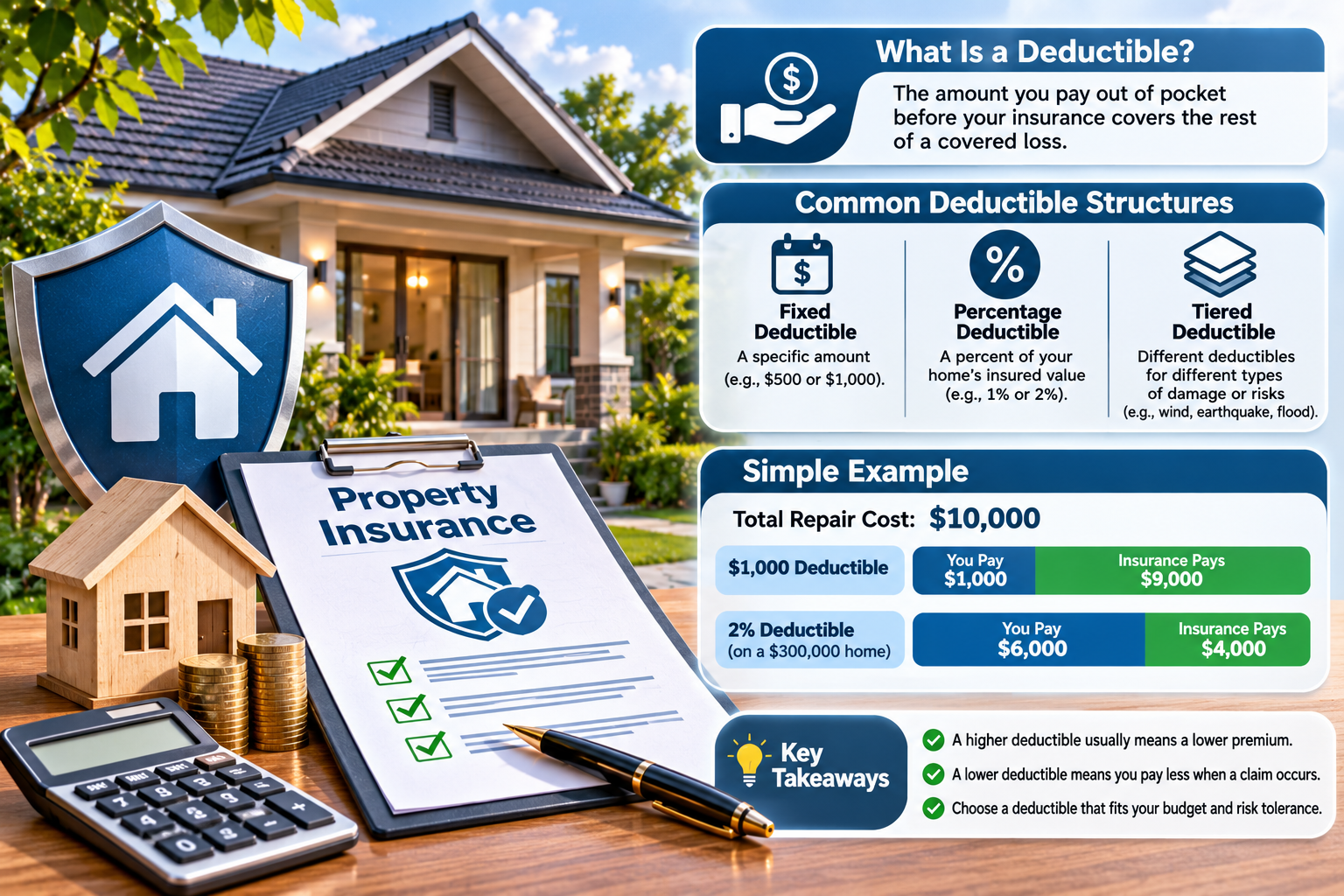
Understanding Property Insurance Deductible Structures can feel like navigating a maze, but it’s crucial for anyone looking to safeguard their assets. Deductibles are not just a footnote in your insurance policy; they play a significant role in how much you pay for coverage and how much you might have to shoulder in the event of a claim. By grasping the various deductible structures, property owners can make informed decisions that align with their financial goals and risk tolerance.
From fixed dollar amounts to percentage-based deductibles, each type has its implications for insurance premiums and claims. This overview will explore how different deductible choices affect coverage costs and which factors should guide your decision-making process. Whether you’re a seasoned homeowner or a first-time buyer, understanding these concepts will empower you to navigate the insurance landscape with confidence.
Understanding the Role of Property Insurance Deductibles
Property insurance deductibles play a crucial role in managing the financial aspects of an insurance policy. They represent the amount that a policyholder must pay out-of-pocket before the insurance coverage kicks in for a claim. This feature is designed to discourage minor claims and encourage responsible ownership, ultimately leading to a more sustainable insurance model. Understanding how deductibles affect property insurance policies is essential for property owners to make informed decisions that align with their financial situations and risk tolerance.
The significance of deductibles in risk management cannot be overstated. By selecting a higher deductible, property owners can often enjoy lower premium rates. This trade-off means that while the upfront costs of insurance are reduced, the policyholder assumes a larger portion of the financial risk in the event of a claim. Conversely, a lower deductible might offer peace of mind for property owners who prefer to minimize their out-of-pocket expenses during a loss. This balance between deductible levels and insurance premiums is critical in determining the overall cost of property insurance over time.
Common deductible structures used in property insurance include fixed dollar amounts, percentage deductibles, and flat-rate deductibles. Fixed dollar amounts require the policyholder to pay a specific sum, such as $500 or $1,000, regardless of the total loss amount. For example, if a homeowner experiences a loss of $5,000 due to damage, they must pay the deductible amount first, with the insurance covering the remainder. Percentage deductibles, on the other hand, are based on the total insured value of the property. For example, a 2% deductible on a home valued at $200,000 means the homeowner would pay $4,000 out of pocket before insurance coverage applies. Flat-rate deductibles are often simpler and can apply uniformly to various types of claims.
In addition to these structures, some policies may feature separate deductibles for specific perils, such as wind, hail, or flood damage. This specialization allows insurers to manage risk more effectively while providing policyholders with options that fit their circumstances. Ultimately, understanding the role of deductibles enables property owners to assess their risk management strategies and choose insurance policies best suited to their financial needs.
Different Types of Deductibles in Property Insurance
In the realm of property insurance, deductibles play a crucial role in determining how much policyholders must pay out of pocket before their insurance coverage kicks in. Understanding the different types of deductibles can help individuals make informed choices regarding their insurance policies, ensuring they select the options that best fit their financial situations and risk tolerance. Below are several types of deductibles commonly found in property insurance policies, illustrating their unique characteristics and implications.
Standard Deductibles
Standard deductibles are fixed dollar amounts that policyholders agree to pay before their insurance provider covers any claims. For example, if a homeowner has a standard deductible of $1,000 and incurs $5,000 in damages from a covered event, they would be responsible for paying the first $1,000, with the insurance company covering the remaining $4,000. This type of deductible is straightforward and offers predictability when filing claims.
Named Peril Deductibles
Named peril deductibles are tied to specific risks that are explicitly listed in the insurance policy. Under this arrangement, coverage is activated only when the damage is caused by one of the perils mentioned in the policy, such as fire, theft, or windstorm. When a claim is made under a named peril deductible, the policyholder must still pay the deductible amount before receiving any payout. An example of this would be if a homeowner’s roof is damaged by a tornado (a named peril) leading to a $10,000 claim, and they have a named peril deductible of $2,000. They would pay the deductible, and the insurance would cover the remaining $8,000.
Percentage Deductibles vs. Fixed Dollar Deductibles
When comparing percentage deductibles to fixed dollar deductibles, it’s essential to understand how each affects claims. Fixed dollar deductibles are predetermined amounts that remain constant regardless of the property value. In contrast, percentage deductibles are calculated based on a percentage of the insured property’s total value. For instance, if a homeowner has a percentage deductible of 2% and their property is insured for $200,000, the deductible would amount to $4,000.
The implications of these deductibles can be significant, especially in high-value properties. A fixed dollar deductible may offer more predictable costs, while percentage deductibles can lead to higher out-of-pocket expenses during significant claims, particularly when property values increase. Here’s a quick comparison:
Percentage deductibles are often applied in certain high-risk areas, while fixed dollar deductibles provide clarity in costs.
This nuanced understanding of deductibles allows property owners to tailor their insurance policies according to their financial capabilities and risk assessments, ultimately guiding them toward more effective insurance coverage.
The Impact of Deductibles on Insurance Premiums
Choosing the right deductible is a crucial element in property insurance that can significantly influence your premiums. The deductible, which is the amount you agree to pay out-of-pocket before your insurance coverage kicks in, has a direct relationship with your insurance costs. Understanding this relationship can help you make informed financial decisions regarding your property insurance.
When you opt for a higher deductible, you typically see a reduction in your premium payments. This is because insurance companies view higher deductibles as a reduced risk on their part; you are assuming more of the risk in the event of a claim. In essence, the higher your deductible, the lower your premiums, which can free up cash for other expenses or investments.
Example of Deductible and Premium Interplay
Consider a property owner who has the option to choose between a $1,000 deductible and a $2,500 deductible. The annual premium for the policy with a $1,000 deductible might be $1,200, whereas the policy with the $2,500 deductible could be priced at $900. In this scenario, the property owner saves $300 by opting for the higher deductible.
The reasoning behind this financial dynamic lies in the calculations made by insurance companies. They analyze historical data on claims and losses to set premium rates. For instance, if the average claim for a homeowner’s insurance is $10,000, the insurance company may factor in the likelihood of a claim being made and the cost of that claim when determining premiums. With a higher deductible, fewer small claims are likely to be submitted, which contributes to a lower overall risk profile for the insurer.
“Choosing a higher deductible can lead to significant savings in annual premiums, reflecting the shared risk between you and the insurer.”
The decision to select a higher deductible should also consider your financial situation and risk tolerance. If you have a solid emergency fund that can cover the higher deductible in case of a claim, the savings on premiums can be a smart financial strategy. This illustrative example demonstrates the delicate balance between premium costs and out-of-pocket expenses in property insurance, making it essential to weigh your options carefully.
Factors Influencing Deductible Selection
When property owners are faced with the decision of selecting an insurance deductible, various factors come into play. Understanding these factors can significantly impact both coverage and financial planning. By analyzing personal circumstances, property specifics, and external influences, owners can make informed decisions that align with their needs.
Property value, location, and risk factors are crucial elements affecting the deductible selection. The value of the property directly correlates with the potential financial impact of a claim. Higher-valued properties might warrant a lower deductible for more comprehensive protection against significant losses. Conversely, owners of lower-valued properties may opt for higher deductibles to reduce premium costs.
Location is another vital consideration. Properties situated in areas prone to natural disasters, theft, or other perils may benefit from lower deductibles, ensuring that owners can recover swiftly without facing substantial out-of-pocket expenses. Risk factors, including crime rates, historical weather patterns, and proximity to emergency services, further influence deductible choices.
Evaluation of Personal Financial Situations
Assessing personal financial situations is essential before selecting a deductible. Property owners should consider their savings, income stability, and potential cash flow issues. A higher deductible can lead to reduced monthly premiums, which can be appealing for those on a tight budget. However, this choice requires a careful evaluation of financial readiness in the event of a claim.
An unexpected incident could lead to significant out-of-pocket expenses if one has chosen a high deductible without adequate emergency savings. Owners should assess their ability to cover the deductible comfortably while maintaining financial security. A well-thought-out financial assessment helps in determining the most suitable deductible level, balancing between premium savings and potential financial risk.
- Property owners should analyze their emergency fund to ensure they can afford the deductible in case of a claim.
- Consideration of monthly cash flow can help determine if a lower premium with a higher deductible is feasible.
- Evaluating existing debts and obligations can provide insight into what deductible may be manageable without causing financial strain.
Navigating Claims with Deductibles
Filing a property insurance claim can be a daunting experience, especially when you’re faced with the reality of deductibles. Understanding how deductibles play into the claims process is crucial for property owners. These out-of-pocket expenses can significantly impact the financial outcome of a claim, making it essential to navigate the claims process with care and strategy.
When a property owner decides to file a claim, the first step is to contact their insurance provider. It’s advisable to have all relevant details at hand, including the policy number, a description of the incident, and any supporting documentation such as photographs or repair estimates. The insurer will guide the owner through the process, which often includes an assessment of the damage by an adjuster. This is where the deductible comes into play; the insurance payout will be calculated after subtracting the deductible amount from the total claim cost.
Challenges Faced by Property Owners with Deductibles
Property owners often encounter various challenges during the claims process, particularly when deductibles are involved. Understanding these challenges can help prepare owners for potential hurdles.
One common challenge is the financial burden that deductibles impose. Many policies have high deductibles, sometimes ranging from $1,000 to several thousand dollars, which can be a shock when unexpected repairs arise. Additionally, some property owners may not fully comprehend how their deductible is applied, leading to confusion about the net payout they will receive.
Another issue is the timing of the claims process. Property owners may face delays in receiving reimbursements after the deductible is applied, which can strain their finances. Furthermore, if a claim is disputed or denied, navigating the appeals process can add another layer of complexity and stress.
Strategies for Managing the Claim Process
To minimize the impact of deductibles on the claims process, property owners can implement several effective strategies.
First and foremost, it’s important to thoroughly review the insurance policy beforehand to understand the specific deductible terms. Knowing whether the deductible is a flat amount or a percentage of the property value can clarify expectations.
Additionally, maintaining comprehensive documentation of damages and repairs can aid in expediting the claims process. Keeping an organized file of receipts, photographs, and any correspondence with the insurance company is beneficial. This not only provides proof for claims but can also help in negotiating the claim amount.
Another strategy is to explore options for deductible reimbursement programs or add-ons offered by some insurers. These can help alleviate the financial burden of the deductible when a claim arises.
Finally, consider building an emergency fund dedicated to covering deductibles. Having funds set aside can provide peace of mind, allowing property owners to manage unexpected expenses more smoothly.
“Understanding your deductible can make a significant difference in how you handle claims and repairs.”
State Regulations and Deductible Structures
State laws play a significant role in shaping the deductible structures found in property insurance policies. These regulations can differ widely from one state to another, influencing both the insurance companies’ offerings and the choices that property owners have when selecting their coverage. Understanding these state-specific requirements is essential for homeowners to ensure they make informed decisions about their insurance policies.
Various states have implemented regulations that directly affect how deductibles are structured in property insurance. These laws can take many forms, influencing factors such as the minimum or maximum deductible amounts, the types of perils covered under specific deductible structures, and how these deductibles are applied in the event of a claim.
Examples of State Regulations on Property Insurance Deductibles
Understanding the landscape of property insurance deductibles is crucial for property owners, especially as state regulations can significantly impact their insurance choices. Below are notable examples of state regulations regarding property insurance deductibles:
- California: California has specific regulations pertaining to deductibles for earthquakes, which often require higher deductibles than standard policies. The state’s regulations also mandate clear disclosures to homeowners about these deductibles, allowing for more informed decision-making.
- Florida: In Florida, property insurance deductibles for hurricane damage can be as high as 10% of the property’s insured value. This regulation aims to balance the risk for insurers while still providing coverage in high-risk areas.
- Texas: Texas law requires that property insurance policies provide at least one deductible option for windstorm or hail claims that is no greater than 1% of the home’s insured value. This is particularly critical for homeowners in coastal regions prone to hurricanes.
- New York: In New York, insurers must clearly Artikel any separate hurricane deductibles if applicable. Such regulations ensure homeowners are aware of their deductible obligations in precarious weather conditions.
Regulations like these can significantly influence property owners’ choices regarding insurance. For instance, the requirement for higher deductibles in states like Florida may lead homeowners to reconsider their financial readiness for claims. Additionally, mandatory disclosure laws in states like California empower homeowners to understand their options better, thus enabling them to make choices that reflect their financial situations and risk tolerances.
“State regulations are pivotal in determining the structure of deductibles, impacting both insurers and insured individuals alike.”
Navigating through these regulations is essential for property owners, as they can affect premium costs, coverage limits, and ultimately, the financial implications of any claims made against their policies. Familiarity with state laws helps homeowners tailor their property insurance coverage to their unique needs and risks.
Future Trends in Property Insurance Deductibles
As the landscape of property insurance continues to evolve, emerging trends in deductible structures are playing a crucial role in shaping policyholder decisions and insurer strategies. Understanding these trends is essential for both consumers and industry professionals who want to stay ahead of the curve in a rapidly changing environment.
Technological advancements and data analytics are becoming increasingly influential in how deductible decisions are made within the property insurance sector. Insurers are leveraging big data and sophisticated algorithms to assess risk more accurately, which in turn affects deductible amounts. This trend allows for more personalized policies that reflect the unique risk profile of individual properties and their owners. Furthermore, with the integration of IoT (Internet of Things) devices, real-time data can provide insurers with insights into property conditions, enabling them to adjust deductibles dynamically based on risk factors.
Emerging Trends in Deductible Structures
Several key trends are transforming the way deductibles are structured in property insurance. These trends not only affect the policies themselves but also influence the overall approach to risk management and mitigation.
Deductibles are becoming more customized, reflecting the specific risks associated with different types of properties.
Among the notable trends are:
- Increased Customization: Insurers are moving towards tailor-made deductible structures that cater to the specific needs and risk profiles of policyholders. This customization can lead to lower premiums for properties with mitigated risks.
- Tiered Deductibles: The introduction of tiered deductible systems allows for varying deductible amounts based on the severity of a claim. This structure can incentivize policyholders to engage in risk-reducing behaviors.
- Climate-Based Deductibles: Properties located in high-risk climate areas may face higher deductibles. Insurers are beginning to implement deductibles that are specifically aligned with the risks posed by climate change.
- Behavioral Incentives: Insurers are increasingly rewarding proactive policyholders with lower deductibles if they engage in specific risk management practices, such as installing security systems or performing regular maintenance.
Impact of Technology and Data Analytics on Deductible Decisions
The influence of technology and data analytics on deductible decisions cannot be overstated. As insurers gather and analyze vast amounts of data, they gain clearer insights into risk factors that impact claims.
Data-driven insights lead to more informed decisions regarding deductible levels, enhancing both insurer profitability and policyholder satisfaction.
Key aspects of this trend include:
- Predictive Analytics: By utilizing predictive models, insurers can forecast potential claims and adjust deductibles accordingly, ensuring that they are reflective of the actual risk profile.
- IoT Integration: The deployment of smart devices in properties allows for continuous monitoring of risks (e.g., water leaks, fire hazards), prompting insurers to offer lower deductibles for properties with enhanced monitoring.
- Automated Risk Assessment: Automated systems can assess risk on a granular level, leading to more precise deductible settings that vary by property type and location.
Climate Change and Future Deductible Policies
As climate change increasingly affects weather patterns and natural disasters, property insurance deductibles are likely to reflect these changes more prominently. Insurers are beginning to recognize that climate-related risks demand an adaptive approach to deductible policies.
Insurers are challenged to develop policies that account for the rising frequency and severity of climate-related events.
Important considerations in this area include:
- Risk-Based Pricing: Deductibles may rise in areas vulnerable to climate events, such as floods or hurricanes, as insurers seek to offset potential losses.
- Enhanced Coverage Options: Policies may offer optional add-ons for climate-specific risks, allowing policyholders to choose higher deductibles in exchange for lower premiums.
- Incentives for Resilience Measures: Insurers might offer reduced deductibles for homes and businesses that implement measures to improve resilience against climate change impacts.
Closing Notes
In conclusion, Property Insurance Deductible Structures are not only about the numbers; they represent a balancing act between risk management and financial strategy. By carefully evaluating your options and understanding how deductibles impact your premiums and claims, you can select a plan that suits your needs. Stay ahead of the game by keeping an eye on emerging trends and regulations that may influence your choices in the future.
Detailed FAQs
What is a deductible in property insurance?
A deductible is the amount you agree to pay out of pocket before your insurance coverage kicks in to cover a claim.
How does a higher deductible affect my premiums?
Generally, opting for a higher deductible can lower your insurance premiums, as you’re taking on more risk yourself.
Are there limits to how much a deductible can be?
Yes, insurance policies often have maximum limits on deductibles based on the type of coverage and state regulations.
Can I change my deductible after purchasing a policy?
Yes, most insurance companies allow policyholders to adjust their deductibles, but this may affect your premium rates.
How do state regulations impact deductibles?
State laws can dictate minimum or maximum deductible amounts, influencing what options are available to property owners.